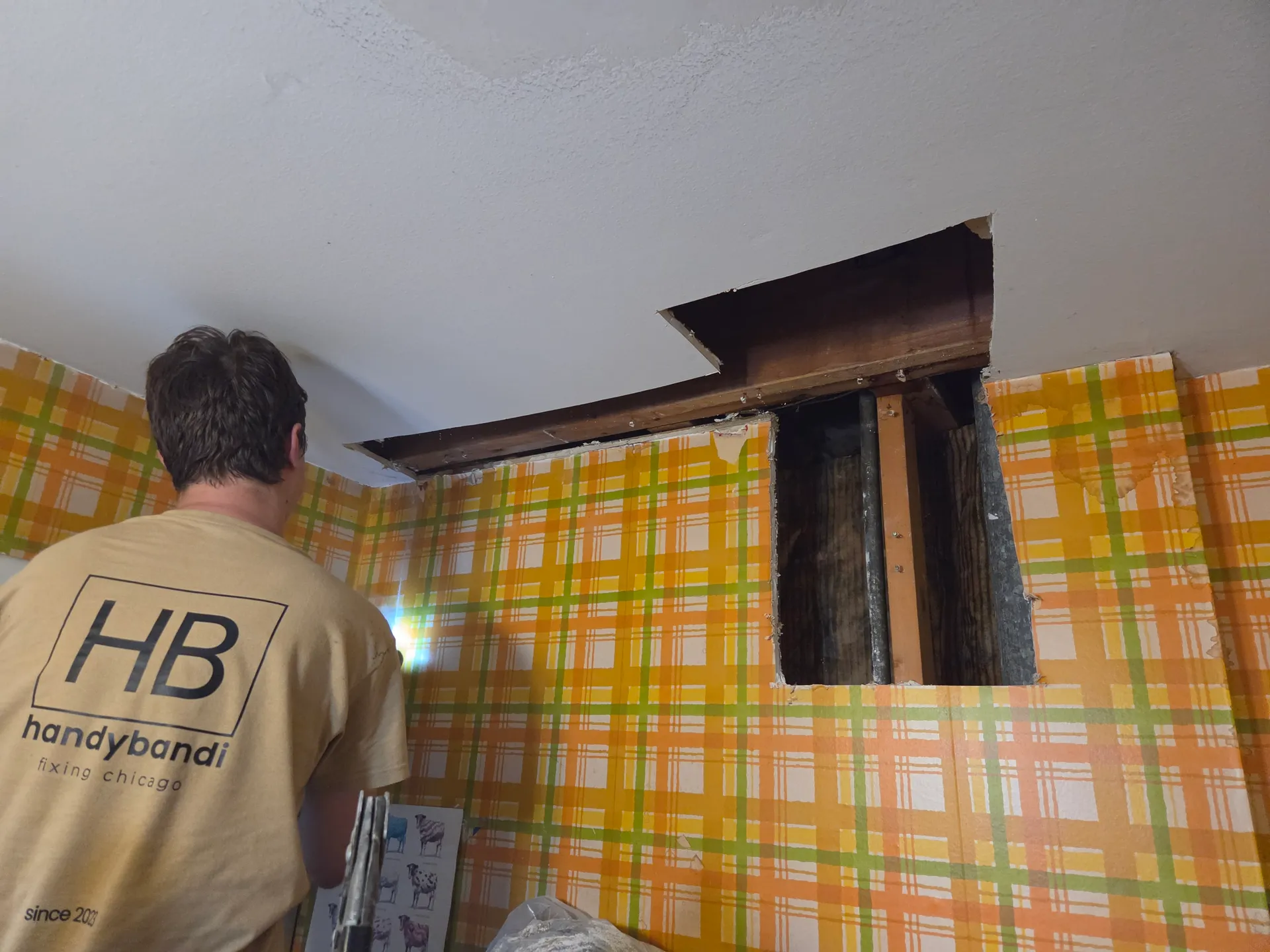
Drywall Repair in Chicago
The doorknob won the argument with your wall, and we're here to settle it with fresh mud and paint.
A doorknob through the wall is a Saturday problem. A brown ring on the ceiling is a Monday problem, and it grows. Drywall repair in Chicago covers both, and we're the crew that shows up with mud and a paint roller. Send us a photo and the size of the damage. You'll get a written estimate, usually without a visit. Think of us as your neighborhood Chicago drywall contractor, minus the three-week wait for a callback.
How We Fix Each Type of Damage
Every kind of damage gets its own fix. Here's how each one goes, with the starting price from our table.
Nail Pops and Hairline Cracks
Chicago's first heating week dries out the framing, and nail pops show up right on schedule as small round bumps. Our fix pulls the old nail and sets two drywall screws beside it. A thin skim hides the spot. A hairline crack along a seam, the settling crack or stress crack kind, gets fresh tape and joint compound. A drywall spot repair like this starts From $189.
Holes From Doorknobs, TV Mounts and Plumbing Access
Size decides the method. TV mount holes under 2 inches get filled and sanded, From $189. A doorknob hole between 2 and 6 inches gets a mesh patch or a California patch, From $249. A plumber access hole or an electrical box cutout over 6 inches needs a patch insert. Backing board gets screwed inside the opening, then the new piece is cut to fit and taped in, From $349. A door stop costs less than any of these, by the way.
Cracked Seams and Damaged Corners
A cracked seam or a butt joint that keeps opening needs new tape. The loose stuff gets cut out, and fresh paper tape or mesh tape gets bedded in and feathered wide. Drywall corner repair on an outside corner means a fresh corner bead after the old one gets dented by a moving dolly. An inside corner gets paper tape folded into the angle. Corner work falls under the From $249 patch price.
Water-Damaged Walls and Ceilings
Wet drywall has a clock on it. EPA gives you 24 to 48 hours to dry it out before mold usually moves in. Professional drywall repair starts with a moisture meter, so we check the area first. Soaked board gets a cut out and replace, and a flooded basement wall gets a flood cut above the water line. A small spot of mold gets dried and treated before we close the wall. Patches bigger than 10 square feet follow EPA guidance for mold growth over 10 square feet, and that's a remediation job. Porous material with mold in it usually goes in the dumpster. A water stain alone gets sealed with stain-blocking primer. Water damaged drywall repair starts From $450.
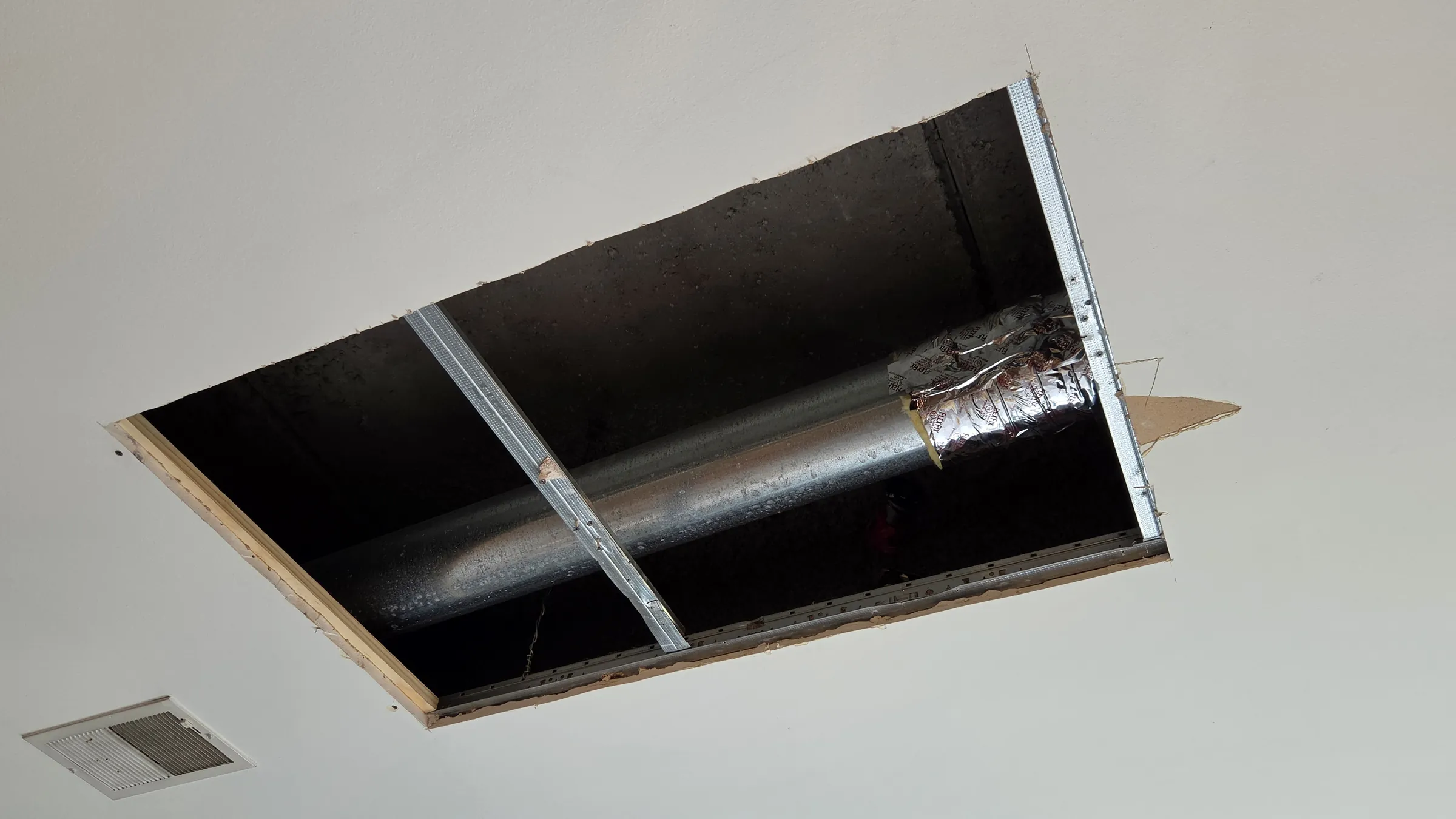
Sagging and Cracked Ceilings
When a ceiling sags, the board has pulled loose from the ceiling joist above it. Sometimes an upstairs leak did it, sometimes old screws simply gave up. We find the reason before we refasten or replace the sheet. Furring strips help where the joists sit uneven. Cracks get taped and blended. If your ceiling also wears a 1970s texture, our popcorn ceiling page covers that. Ceiling work starts From $350.
Repair Prices at a Glance
Most drywall repair contractors in Chicago keep prices off their websites, so here are ours. The price of drywall repair in Chicago follows the size of the damage and whether water got involved. A ceiling costs more than a wall because everything happens over your head. Our drywall repair service includes painting the patched spot on every hole and crack, so it's drywall and paint repair in one visit.
| Type of Work | Cost in Chicago |
|---|---|
| Drywall hole repair, up to 2" | From $189 |
| Drywall hole repair, 2-6" | From $249 |
| Drywall hole repair, 6"+ / patch insert | From $349 |
| Drywall ceiling repair | From $350 |
| Water damaged drywall repair | From $450 |
| Drywall sheet replacement, per sheet | From $450 |
| Emergency service | +$250 fee |
Emergency drywall repair means same day, evenings or weekends. Everything else lives on our full drywall price list.
Repair or Replace the Sheet: How We Decide
A patch makes sense for one hole in a solid sheet. Replacement makes sense once the damage outgrows a patch, and we watch for four things.
- The damaged area is bigger than a patch.
- The board got soaked or grew mold.
- The gypsum crumbles when pressed.
- One sheet already has several holes.
Sheet replacement runs From $450 per sheet. That covers removing the damaged section, hanging the new board, taping the seams and sanding it ready for primer. Primer, paint, framing repair and insulation are priced separately. If half the room needs new board, that's a job for our drywall installation crew.
Patching Drywall Into Old Chicago Plaster Walls
Picture a 1920s bungalow where the plumber just opened the wall to reach a pipe. Chicago has more than 80,000 bungalows from 1910 to 1940, close to a third of its single-family homes, per the Historic Chicago Bungalow Association. Nearly all of them have lath and plaster walls.
Plaster over lath runs thicker than a standard drywall sheet. So we shim the insert until it sits flush with the old plaster wall. Then we run joint compound across the whole transition, wide enough that your eye can't find the edge. Done right, the plaster patch disappears. Cracked or crumbling plaster around the opening gets the full plaster repair treatment first.
Matching the Texture So the Patch Disappears
Most Chicago walls are smooth, but some got orange peel or knockdown along the way. Orange peel looks like fine bumpy skin. Knockdown looks like flattened splatter. A smooth patch on a textured wall shows up the moment afternoon sun hits it.
We do a texture match as close to the existing finish as we can get. Sometimes a light skim coat across the wider area blends it better than a spot fix. We judge it from your photos first and on site when needed. A perfectly invisible match is something nobody can promise, and we won't either. The paint on the patched spot is part of the price.
Older Homes: What We Check Before Cutting
Lead paint was banned for homes in 1978, so a Chicago two-flat painted before that probably has some under the newer coats. EPA has required renovation firms that disturb it to be certified since April 22, 2010. Containing the dust is the whole point, and the EPA lead-safe work rules for renovation firms lay out how.
Old joint compound is the other catch. Patching compounds made before the late 1970s could contain asbestos. That's why old mud gets tested before anyone sands it.
Frequently Asked Questions
What are drywall repairs?
Drywall repairs are what happens after the moving dolly and the upstairs bathtub have had their say, and every one of ours finishes with matching paint.
What is the most effective way to repair drywall?
Doorknob holes take a mesh square or a California patch, and the tiny ones from picture nails need nothing more than a swipe of filler.
Can damaged drywall be repaired?
Gypsum doesn't mind a dent, so most damage patches fine, and EPA only gets nervous once wet board stays damp past the 48-hour mark.
What is the best material to use for repairing drywall?
Hot mud sets hard in under an hour, which makes it the pick for deep fills, and the finish coats go on with premixed compound.
What is the best type of drywall?
If your living room has drywall, it's almost certainly half-inch board, while a garage wall shared with the house gets 5/8-inch Type X for the fire rating code asks for.
What do you call a person who fixes drywall?
Call them a drywall finisher or a taper, though most homeowners just say drywall repair handyman, and we'll pick up the phone for any of those names.
Send a photo of the damage and get a repair quote the same day.